1,10-Dichlorodecane: Looking Past the Lab Bench
Historical Development
Decades back, curiosity about halogenated hydrocarbons sparked earnest trials in small university settings and industrial research hubs. In those early days, the drive wasn’t just discovery for science’s sake. Chemical industries chased durability in lubricants, novel detergents, and new solvents for specialty coatings — most of which circled back to the persistent demand for custom-tailored molecules. Tinkering chemists realized that linking chlorine atoms to decane's carbon backbone granted a predictable set of properties and reliability. That kicked off a steady scale-up in synthesis and applications, especially as regulatory standards and process safety matured over the years. Since then, companies kept refining the process for higher yields, fewer side reactions, and safer workplace conditions—nobody in the field wants the repeat of those early hazards, and every mishap drives new protective measures.
Product Overview
1,10-Dichlorodecane isn’t out to steal headlines, but it’s cut a niche as an intermediate, especially with growing pressure on material performance and chemical selectivity in manufacturing. Picture an oily, colorless liquid that holds its own when mixed with various non-polar solvents. Real lab work can feel like sorting puzzle pieces. If you’re adjusting viscosity or coaxing out unique reactivity, this compound slots right into plenty of custom syntheses, more so in industrial blending for plastics and specialty additives. The product remains in demand for creating building blocks that power up more advanced chemistry.
Physical & Chemical Properties
Down in the storeroom, you’d recognize 1,10-Dichlorodecane by its persistent, faintly sweet odor and its resistance to water. It stands as a dense liquid at room temperature, and it doesn’t evaporate quickly, which proves useful during handling and storage in humid environments. This compound’s boiling point floats around 280°C, with a melting point set low enough for convenient liquid handling during most seasons. It dissolves neatly in organic media, yet part of its practical value stems from its chemical stability — the two terminal chlorines anchor its reaction profile and keep unwanted side products at bay.
Technical Specifications & Labeling
Labs and warehouses stick sharp labels on 1,10-Dichlorodecane containers. While the purity—often 98% or higher—matters most in research and industrial settings, those sourcing quality material check for precise labeling that includes batch numbers, expiration dates, and safety markings. Anyone shipping it has learned not to underestimate the paperwork: material safety sheets, transportation hazard classes, and proper classification under GHS stand front and center during audits. Overlooking this doesn’t just break the law; it also invites fines and potential harm to workers. Manuals and spec sheets detail density, refractive index, and storage temperatures, mostly to keep users ahead of potential mishaps.
Preparation Method
Synthesis walks a fairly straightforward path. Most chemists choose the direct chlorination of decane—initiated under UV light or with a radical initiator—precisely targeting the terminal carbons. Controlling reaction temperature and time calls for sharp attention; drift a little too far, and side reactions will eat into purity. Halogenation isn’t just mixing and stirring; managing exotherms and containing chlorine gas pushes every seasoned hand to double-check hood function and ventilation. Pilot plants in chemical companies have cut their teeth on these procedures, fighting for reliable scale-up and robust batch-to-batch consistency. It’s not glamorous, but every successful run locks in production jobs.
Chemical Reactions & Modifications
Plenty of folks overlook the versatility of 1,10-Dichlorodecane’s terminal chlorines. Those atoms provide clear handles for nucleophilic substitution—swapping the chlorines for everything from amines to thiols, which then open doors for custom surfactants, lubricants, and pharmaceutical intermediates. In cross-linking reactions, these chlorines help bridge into new polymer backbones, twisting the compound into functionalized monomers or cross-linking agents. Each route takes care; conditions must avoid over-chlorination or unwanted ring closure, which costs money in waste and time in purification. Yet chemists return to these modifications because the molecule’s backbone puts up with a range of reaction environments without decomposing.
Synonyms & Product Names
Different suppliers and research bodies use a variety of names. Besides the formal 1,10-Dichlorodecane, materials often arrive labeled as Decamethylene dichloride or as part of internal code numbers tied to cataloging systems. Some European texts use the term α,ω-dichlorodecane. The distinction matters when searching global chemical inventories, as mismatches can mean days lost on procurement or regulatory registration. Plenty of old researchers still recall purchasing this under trade names that have since faded as the sector consolidated.
Safety & Operational Standards
Handling halogenated organics never offers room for sloppiness. Chronic exposure carries risk — not every solvent splash stings right away, but skin absorption, vapor inhalation, and improper disposal raise both acute and long-term health concerns. Labs train workers to wear gloves, goggles, and occasionally full respirators if handling bulk volumes. Fire marshals inspect storage areas for proper ventilation and explosion-proof lighting, since vapors from high-temperature reactions can build up quickly. Every spill triggers containment protocols and environmental reporting; it doesn’t take a chemical engineer to understand the risks of persistent contamination. The product won’t let you down if respect keeps pace with ambition.
Application Area
1,10-Dichlorodecane occupies a prized spot as a building block. Industries count on its structure for ionic liquids, specialty surfactants, and lubricants where molecular architecture matters more than simple performance. Synthetic chemists love its adaptability in fine chemical synthesis—swapping out the chlorines enables rapid expansion into everything from novel pharmaceutical intermediates to designer coatings. Those working in materials science see opportunity for cross-linking improved polymers or tweaking surface modifications in advanced composites. The ongoing need for more robust, targeted materials seems poised to keep demand steady.
Research & Development
Academic chemistry never seems satisfied with the status quo; groups keep probing for new reactions that leverage 1,10-Dichlorodecane's structure. Most attention lands on greener synthesis routes—photocatalytic approaches, catalytic halogen exchange, or even biotransformations under mild conditions. Industrial labs chase cost reduction, safer processes, and shorter reaction cycles. Competitive pressure from regulatory shifts and raw material price hikes means that every innovation in recycling, purification, or feedstock utilization gets a full internal review before adoption. Collaborations between universities and chemical producers drive discoveries that don’t just add incremental value but also rethink what’s possible with halogenated linear aliphatics.
Toxicity Research
Researchers dig deep into how 1,10-Dichlorodecane and its by-products affect humans and ecosystems. Initial animal studies show that acute toxicity remains moderate—nobody wants to ignore the risk, but it rarely ranks as the highest hazard in the lab. Chronic studies warn of potential liver and kidney stress as doses rise, and some breakdown products threaten aquatic life if allowed to reach waterways. This knowledge steers disposal protocol and keeps environmental impact squarely in sight. Toxicologists and industrial hygienists continue tracking workplace exposures and epidemiological outcomes, learning from past mistakes where workers suffered because proper precautions lagged behind usage.
Future Prospects
Modern manufacturing pursues stronger, lighter, and more customizable materials, pushing research teams to revisit compounds like 1,10-Dichlorodecane. Pressure mounts for green chemistry—sustainable feedstocks, closed-loop recycling, and minimized chlorine waste all drive ongoing projects that blend industrial know-how with academic creativity. Next-generation applications in advanced polymers, high-performance lubricants, and even medical-device coatings could rely on the unique twin-reactive sites offered by this molecule. As regulatory standards evolve and global supply chains demand traceability and transparency, the bar for safety, labeling, and responsible use rises. Those who invest in safer production technology, real-time monitoring, and sustainable end-of-life management will shape how 1,10-Dichlorodecane and its cousins fit into the future of synthetics and specialty chemicals.
Getting to Know 1,10-Dichlorodecane
Curiosity often brings up questions about certain chemicals, leading folks to dig in for answers that actually matter. For those looking at 1,10-Dichlorodecane, chasing down the chemical formula can feel technical, but really, it opens the door to a better understanding of how this compound fits into industry and research.
Decoding Its Structure
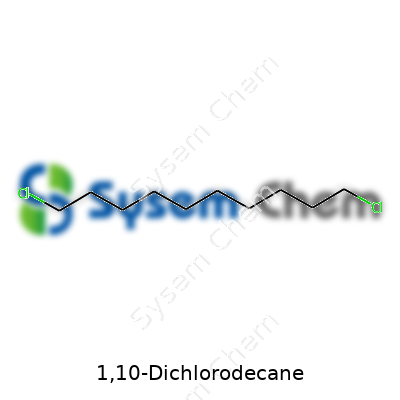
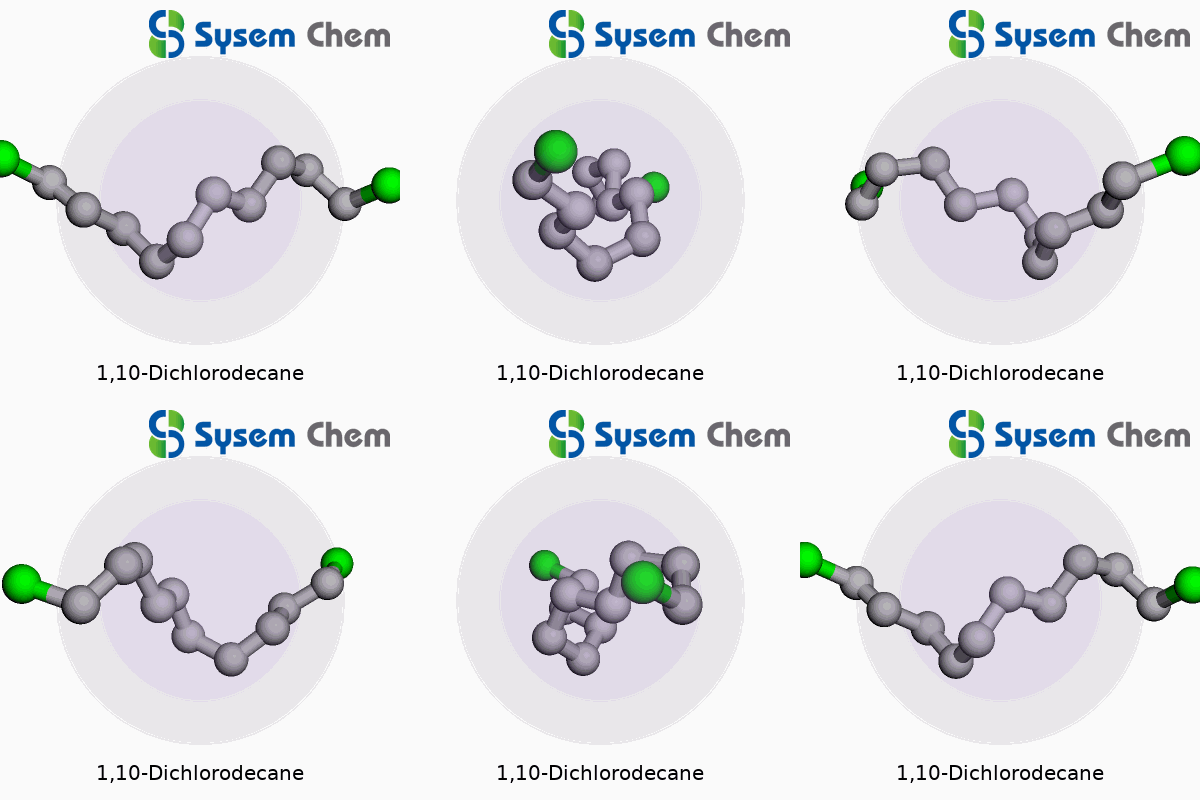
Start with the basics. Decane serves as the parent hydrocarbon, a straight chain with ten carbon atoms. The name “1,10-Dichlorodecane” gives a clue: chlorine atoms take up spots at the very first and the very last carbon atoms along that chain. The chemical formula shapes up as C10H20Cl2.
Understanding this formula goes beyond rote memorization. It allows chemists and manufacturers to predict how the molecule reacts, what conditions it tolerates, and where its strengths lie. That comes in handy for anyone tasked with working safely or efficiently around anything involving halogenated hydrocarbons.
Importance in Industry and Everyday Life
1,10-Dichlorodecane doesn’t usually make its way into news headlines. That's a shame, since these tightly defined molecules have real world consequences in the chemical and material industries. Compounds like this lay the groundwork for specialty polymers, surfactants, and can tweak the chemical properties in lubricants or other blends. Occasionally, derivatives of these molecules help shape how pesticides or other fine chemicals get made.
Growing up around a family that worked in industrial chemistry, I saw the careful respect given to each chemical. Chlorinated hydrocarbons always demanded serious handling due to their stability and environmental persistence. These chemicals can linger much longer than many people realize, so each use weighs utility against safety for people and ecosystems.
Health and Environmental Concerns
Chemicals bearing chlorine atoms raise eyebrows, and for good reason. Persistent exposure, improper disposal, and contamination events have triggered major health and regulatory questions over the decades. 1,10-Dichlorodecane shares some of this burden, especially since chlorine atoms boost a molecule’s resistance to biodegradation. I remember stories from those handling such compounds who never cut corners with disposal. There’s little room for carelessness, and keeping good safety habits makes a real difference at home and in broader communities.
Modern environmental stewardship urges both companies and consumers to seek reduced halogenated compound use or find improved containment and recycling measures. Developing green chemistry strategies, such as closed-loop systems, tighter controls, and rigorous lifecycle analyses, offers some hope. Every step toward using fewer persistent chlorinated chemicals leads to cleaner soil, safer air, and better water quality.
Moving Toward Safer Solutions
Plenty of trouble starts with lack of knowledge or resources. Teaching both the basics—like what a formula means—and the big picture—like downstream health impacts—reduces accidental harm. Investment in safer alternatives, stricter workplace regulations, and more transparent research into environmental impacts can all lead to progress. Policymakers and scientists working together hold the key to meaningful change, and practical chemical understanding empowers those efforts.
Industry’s Subtle Player
1,10-Dichlorodecane often works behind the scenes in chemical manufacturing and research settings. Its structure, which includes a long chain capped with two chlorine atoms, lets it fill a set of niche but vital roles. In my time working with formulations for specialty lubricants and solvents, I saw this compound show up more than once as a workhorse for blending and synthesis tasks.
Synthesizing Complex Molecules
Researchers rely on 1,10-Dichlorodecane as a building block for creating more complicated molecules. This compound helps stitch together larger organic molecules for use in pharmaceuticals, agrochemicals, and custom-made materials. There’s a reason chemists like it: the chlorine atoms, tucked at each end, let other groups attach during chemical reactions. This makes 1,10-Dichlorodecane a choice intermediary. You’ll find papers in major science journals describing its involvement in making surfactants, which end up in everyday items like cleaners and washing powders.
Chemical Processes and Manufacturing
During my early days in the chemical industry, I noticed how often factory processes churned out 1,10-Dichlorodecane as a step in larger production routines. Workers mix it into reaction baths or use it as a solvent where high stability and low reactivity (apart from those chlorines) matter. For example, some manufacturing facilities use it for synthesizing specialty plastics or polymers. Heat resistance and flexibility often get a boost from chemicals built from the 1,10-Dichlorodecane backbone, giving certain products a longer life or better performance.
Role in Material Science
Material scientists tap this compound to adjust the properties of new coatings and sealants. One of my colleagues worked on developing hydrophobic barriers for electronics; 1,10-Dichlorodecane helped fine-tune water resistance and surface slickness on printed circuit boards. Without getting technical, this use comes down to the molecule’s ability to form strong, flexible chains when combined correctly, delivering features consumers rarely notice directly but depend on for device reliability.
Potential Concerns and Solutions
As with many chlorinated compounds, questions about toxicity and environmental risks arise. Persistent compounds can stick around in soil and water, raising long-term health concerns. Responsible companies now track emissions and explore less persistent alternatives, guided by updated regulations. In production plants where I consulted, airtight containment and rigorous personal protective equipment standards protected workers from chronic exposure. Factories started capturing and recycling vapors to reduce releases into the air, which not only keeps employees safer but cuts down on neighborhood complaints. The push for “greener” chemistry continues, since the public wants useful compounds but not at the expense of their health or local environment.
Future Uses and Careful Adaptation
With advances in green chemistry, labs have pushed to substitute less harmful variants in place of chlorinated ten-carbon chains. Safer disposal methods, improved recycling, and stronger government oversight steer innovation. In my experience, industries adapt when new data shows harms; people want to avoid stubborn pollution issues from the past. New routes that reduce toxicity without giving up performance represent the next step, driven by both community demand and regulatory pressure.
References:- National Center for Biotechnology Information. PubChem Compound Summary for CID 81937, 1,10-Dichlorodecane.
- OECD SIDS Initial Assessment Report for 1,10-Dichlorodecane.
What You’re Dealing With
1,10-Dichlorodecane looks innocent—clear, nearly odorless, almost like a hundred other liquids on the lab shelf. Working with it strips away that illusion fast. The chlorinated, ten-carbon chain means more than a mouthful of syllables and numbers. You’re holding a chemical that can quietly burn skin and damage organs if you treat it casually.
Don’t Trust Bare Skin or Open Eyes
Gloves aren’t optional here. Nitrile works best, changing them out the second you spot a splash or tear, even a small one. Splash-proof goggles stop stinging, slow-building irritation if a drop jumps up. I’ve seen someone decide to ‘just pour quick’—didn’t work out. Dealing with the aftermath feels embarrassing and avoidable.
Even a short exposure can turn skin red and raw. The vapor, while not overwhelmingly strong, still finds its way into your system if you ignore proper ventilation. Neat hoods, exhaust fans, open spaces—stick to them like a rule, not a suggestion.
Clothes Matter More Than You’d Think
Lab coats and long sleeves mean less to wash up later. Synthetic fibers trap the chemical in, making it harder to clean off if things go sideways. Cotton or specialized chemical-resistant coats work better, letting you take them off and toss them in a hazard bin if needed.
Shoes cover toes for a reason. Floor spills travel fast, pooling in places nobody expects. Cleaning up with the right absorbent pads saves a lot of skin and time. Regular mops spread it further.
Don’t Inhale Problems
If you don’t trust your nose, trust the MSDS sheet: 1,10-Dichlorodecane sends vapors into the air, which get into your bloodstream after just a few breaths. Respirators sound dramatic, but in small rooms, or when heating, open a fresh cartridge and put it on. Hot plates and open flames don’t mix with this stuff. Remember, a flashpoint just below 120°C means a small spark spells disaster in a rush.
Label, Store, and Track
Keep bottles labeled, with date and your name clear. Mixing containers by accident is the mistake nobody wants to admit but everyone has seen. Separate storage cabinets labeled for organohalides lower the odds of a mix-up. Lock up when not in use, and never leave unlabeled containers sitting on benches.
Instead of eyeing containers with suspicion later, make a habit of double-checking before and after use. Keep an updated log of usage and disposal. That log saves headaches during audits, but more importantly, it catches small leaks or missing inventory before something goes wrong.
Clean-Up Means Respect
Spills demand immediate attention—no hesitation. Specialized absorbents are better than paper towels, which just smear danger around. All cleaning gear moves straight into hazardous waste bags, nothing into the normal bin. Wash hands, exposed arms, and—if there’s a splash—the outside of shoes. I like to keep a fresh shirt nearby, just in case.
After years around these chemicals, you learn shortcuts don’t pay off. Mixing respect for 1,10-Dichlorodecane with the right gear, labels, and habits creates a culture of safety that everyone feels. It’s less about following a rulebook, more about looking out for each other. That’s the difference between an uneventful day and an emergency call you never forget.
Everyday Chemistry in Action
Plenty of folks dismiss boiling points as a detail tucked away in thick textbooks, but for anyone who’s ever spilled a bottle of cleaning agent or tried to cook pasta properly, it’s clear that knowing when something turns from liquid to vapor plays a role in both factories and homes. Today, 1,10-Dichlorodecane sits in the spotlight, a chemical with a structure that draws attention among industrial circles and, frankly, plenty of people working in labs. Its boiling point lands around 315°C to 316°C (599-601°F). Not exactly something you’d reach on the back burner at home.
Why Boiling Points Mean More Than Just a Number
I’ve come across handling these oddball organochlorines during my time in the lab. They barely budge at room temperature — nothing flashy. Their boiling point tells a story about their molecular strength. 1,10-Dichlorodecane stays grounded as a liquid unless you hit it with a good amount of heat. Many folks don’t realize, but the higher you go on the boiling scale, the stickier and more persistent a molecule becomes. In an era where regulators, chemists, and manufacturers eye safety and emissions, this number tells everyone how much heat something can take — and how ugly things can get if equipment malfunctions or someone tries to dispose of it carelessly.
Handling Risks and Workplace Realities
Walk into any industrial site playing around with 1,10-Dichlorodecane, and someone knows where the Material Safety Data Sheet sits. High boiling point means the compound won’t jump into the air without a fight, so accidental vapor releases are less likely than with lighter solvents. Good for lungs, a bit easier for workplace comfort. At the same time, I’ve seen folks underestimate the challenge — since it sticks around longer, spills can linger, and cleanup turns into a battle of patience. Fires can burn hotter and longer if the chemical gets involved. The boiling range also signals to processors how much energy needs to be dumped into distillation, making extraction and refinement a costlier, energy-hungry affair compared to easier-boiling cousins.
Real-World Decisions About Use
Many manufacturers want control, predictability, and safety. A high boiling point offers some peace of mind, letting them run reactions with less pressure, fewer explosions, and lower risks of chemical plumes sneaking into ventilation. In this way, 1,10-Dichlorodecane brings stability. Yet there’s always the flip side. Not every part of the world runs on unlimited budgets, and running equipment hotter for longer just to get the right separation means higher energy bills and tired machines. Disposal and environmental rules get tighter every year, so the stubbornness of high-boiling compounds creates its own hazards — think groundwater contamination and tricky incineration requirements.
Better Practices and Next Steps
Instead of letting these facts collect dust, chemists, safety managers, and environmental watchdogs need to focus on better handling training, smarter containment systems, and greener chemistry approaches that swap out tough-to-break molecules for ones that behave predictably. I’ve seen companies rethink their approach to labeling, storage, and emergency readiness just because they paid attention to chemical profiles like this. Regulations can’t shoulder the whole burden; culture, ongoing education, and respect for a chemical’s stubborn traits matter just as much.
Final Notes for Everyday Handling
The boiling point of 1,10-Dichlorodecane doesn’t just live in a database for regulatory wonks. It shapes real-world practice, costs, and risks across every step. Treating it as more than a number—considering the impacts on safety, energy, and environment—puts everyone in a stronger position to handle chemicals wisely.
Why Proper Storage Really Matters
Anyone who’s spent time handling chemicals knows that safety matters most once the workday ends and supplies get put away. 1,10-Dichlorodecane isn’t something most people keep under the kitchen sink, but if you work in a lab or an industrial plant, its presence is no surprise. It’s a chlorinated hydrocarbon, so it won’t explode the moment you look at it, but leaving it out in the open invites trouble. This isn’t about paranoia—it’s about keeping people, property, and the environment safe from what can go wrong.
Understanding the Properties
On paper, 1,10-Dichlorodecane looks a lot like other organochlorines: colorless, heavy, somewhat oily. It doesn’t set off Geiger counters, and it won’t fume up the room like ammonia. But it’s more than just an innocent liquid. It can irritate the skin, eyes, and lungs. Once it hits the environment, it doesn’t magically disappear but lingers. For those reasons, haphazard storage doesn’t just turn into extra cleaning; it could mean real risk for coworkers or the neighborhood outside.
Practical Steps for Proper Storage
I’ve worked in spaces where chemicals got thrown into closets to “deal with later,” and I’ve seen how those bad habits can snowball. Storing 1,10-Dichlorodecane should always mean using a tightly sealed container, made from a material that can handle organic solvents. You can’t substitute an old soda bottle—chemicals like this interact with some plastics or rubbers, leading to leaks or even a mess of melted material and contaminated air.
Put containers in a cool, dry, well-ventilated room. The fewer swings in temperature, the better. Heat encourages chemical reactions, and that includes breaking down the container, which can release fumes or worse. I remember one summer when an air conditioning failure left a storage room hot for days. One poorly-chosen container swelled, then split along a seam—the clean-up wasn’t pretty, and the lab learned a costly lesson.
Fire risk doesn’t always sit at the top of people’s minds for all chlorinated hydrocarbons, but storing this liquid away from ignition sources is always a smart move. Don’t stash it near open flames, sparking motors, or even sunlight streaming through a window. Keep it separate from reactive chemicals like strong bases or oxidizers; a few moments of inattention could result in toxic fumes.
Label everything with its proper name, concentration, and the date it got stored. It seems tedious until you need to clean up or move things around, and suddenly you’re staring at an unmarked bottle. More than once, I’ve seen retired chemists called in to try to recognize a mystery substance because no one wanted to spend five seconds labeling.
A Community Responsibility
It often feels like chemical storage rules just come from paperwork piled up by someone in an office, but every guideline usually traces back to someone’s actual disaster. Following best practices keeps people safe, helps the environment, and ensures that a chemical like 1,10-Dichlorodecane never causes more harm than good. Investing a little time in proper storage setup prevents bigger headaches down the line—and sometimes, it spares lives and careers.
Room for Improvement
Not every company is perfect, and not every worker stays vigilant every day. Refreshing storage training each year helps. Scheduling regular checks on containers and keeping up-to-date inventory lists cuts down on errors. These steps don’t just tick a compliance box—they create habits that protect everyone. For those new to the field, learning these best practices early makes all the difference once the lab gets busy and distractions start piling up.